
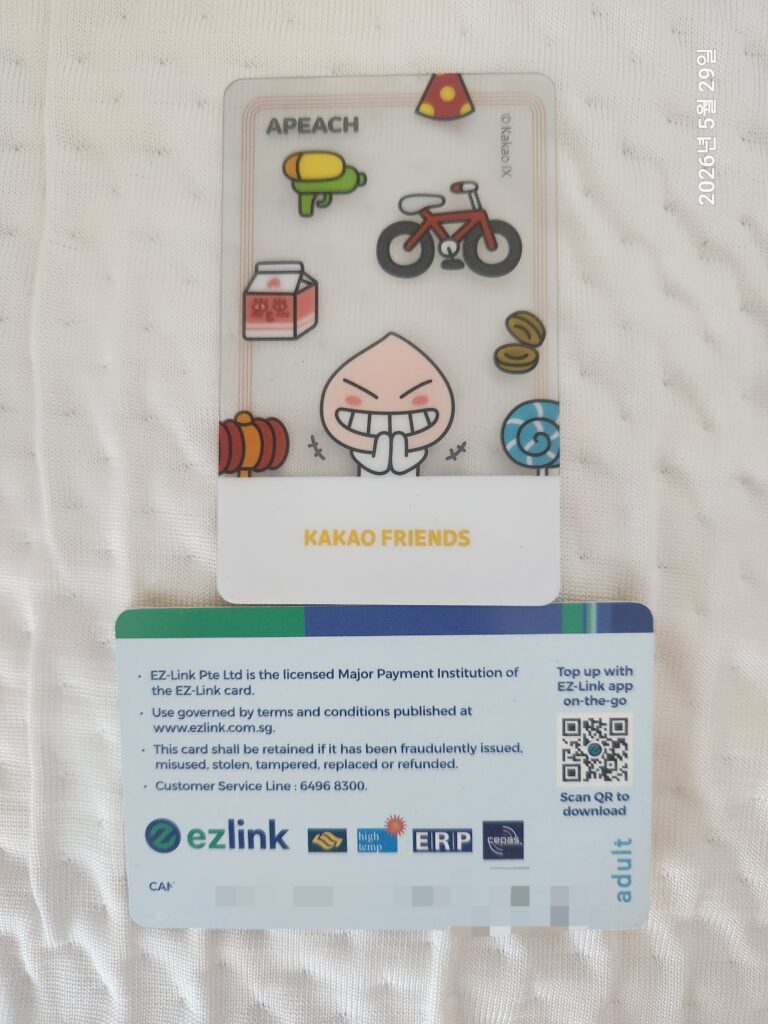
When I left Singapore after several years of living there, one of my last errands before heading to the airport was refunding my EZ-Link card. The process was straightforward enough—I got most of the balance back through the app, though the card itself cost a few dollars that were non-refundable. As I was doing it, I found myself wondering: is the T-Money refund process in Korea just as simple?
The short answer is yes—and in some ways even easier. But there are a few conditions worth knowing before you queue up at the counter on your way out.
1. Where to Get Your T-Money Refund
You do not need to find a special office or go out of your way. Refunds are available at two places you will pass anyway.
-
🏪 Any Major Convenience Store (GS25, CU, 7-Eleven, Emart24): This is the easiest option for most travelers. Walk up to the counter, hand your card to the cashier, and say “Hwan-bul” (환불). They will process the refund instantly and hand you the remaining balance in cash, minus a small service fee.
-
🚇 Subway Station Service Centers: Every major subway station has a staffed service center, usually located near the ticket machines or main entrance. Staff can process refunds directly, and English assistance is available at most central stations.
If you are looking for the absolute basics—like where to buy a physical card, how to register child discounts, or how to set up the virtual T-Money card on your iPhone—make sure to read my comprehensive starter guide first: [How to Buy, Charge, and Refund a T-Money Card in South Korea]
2. Refund Conditions and Fees
Before you queue up, here are the key rules to know for 2026.
| Condition | Details |
| Instant cash refund | Available for balances under 20,000 to 30,000 KRW (depending on the convenience store chain) |
| Higher balances | Refunded via head offices or bank transfer (requires a Korean bank account) |
| Service fee | 500 KRW deducted from your remaining balance |
| Card deposit | The card itself (2,500–4,000 KRW purchase price) is non-refundable |
| What you keep | The physical card—a cheap but cheerful souvenir |
The 500 KRW service fee is negligible for most people. The more important thing to know is the 20,000 to 30,000 KRW ceiling for instant cash refunds. If you have been topping up generously and have a large balance sitting on your card at the end of your trip, you cannot get it back instantly at a local shop without a Korean bank account—which most short-term tourists do not have.
My practical advice: In the final two or three days of your trip, stop topping up your card and let the balance run down naturally through normal transit use. Aim to finish with somewhere between 2,000 and 15,000 KRW left, collect your instant cash refund at a convenience store, and walk away clean.
3. What About the Children’s Discount Card?
If you registered a child’s T-Money card at a convenience store counter with your child’s passport details, the refund process is identical. Hand it to the cashier, say “Hwan-bul,” and receive the remaining balance minus the 500 KRW fee. The discount registration does not affect the refund process at all.
4. Can You Just Keep the Card?
Absolutely—and many people do. The T-Money card stays valid indefinitely. If you are planning to return to Korea in the future, simply keep the card and top it up again on arrival. Any remaining balance will still be there waiting for you.
Given that the card itself costs 2,500 to 4,000 KRW and the refund fee is 500 KRW, keeping a card with a small remaining balance and bringing it back on a future trip is genuinely the smartest financial move if Korea is somewhere you plan to revisit.
💡 If you are unsure whether to keep your T-Money or switch to a more modern tourist card for your next trip, check out my ultimate comparison: [Best Tourist Card in Korea: WOWPASS vs Climate Card vs NAMANE]
5. 🚨 2026 Update: Will Foreign Cards Ever Work Directly on Transit?
This is a question I started asking after watching how seamlessly contactless transit payments worked in other countries. In Singapore, for instance, visitors from Korea were sometimes able to tap foreign cards directly on the MRT without buying a separate EZ-Link card at all—something that still surprises most Koreans who visit.
Korea is currently behind on this, but change is coming. The Seoul Metropolitan Government has officially announced a plan to introduce an EMV-based open-loop contactless payment system across the city’s public transit network. The rollout is structured in phases:
-
2025–2026 (Current Phase): EMV certification modules are actively being expanded on city buses and select subway lines. Additionally, foreign credit cards can now be used to purchase and top up T-Money cards at new-generation ticket machines inside major subway stations.
-
2030 Target: A full, universal open-loop system will be operational, meaning international visitors will be able to tap a foreign Visa or Mastercard directly on subway and bus readers without purchasing a separate transit card at all.
The Bottom Line for 2026: As of mid-2026, direct tap-to-pay on all buses and subways using a foreign card is not yet universally available. For now, getting a physical T-Money card remains the most reliable and practical choice for international visitors. But the infrastructure is being built, and Korea is moving in the right direction faster than most people realize.
6. Practical Refund Timeline: When Should You Do It?
-
3 days before departure: Stop topping up, let the balance run down.
-
Last day in Seoul: Get your T-Money refund at a convenience store near your hotel to avoid rushing.
-
At Incheon Airport: Refund counters are available at both Terminal 1 and Terminal 2 if you forget, but be prepared for potential lines during peak departure times.
Summary Checklist for T-Money Refund
-
Refund at any GS25, CU, 7-Eleven, or Emart24 counter—just say “Hwan-bul.”
-
A 500 KRW service fee is deducted from your remaining balance.
-
Instant cash refunds are mostly available for balances under 20,000 to 30,000 KRW.
-
Stop topping up 2 to 3 days before departure and let the balance run down naturally.
-
If you plan to return to Korea, keep the card—your balance never expires.
-
As of 2026, foreign cards cannot yet tap directly on all Seoul transit, but a full open-loop system is targeting 2030.
-
If you forget to refund before leaving, counters are available at both Incheon Airport terminals.