
If you have ever spotted a bright open-top double-decker rolling through the historic streets of downtown, jumping on a Seoul City Tour Bus is one of the most exciting ways to sightsee. My youngest son, who was five years old at the time, had been singing a nursery rhyme about double-decker buses for weeks. He had never seen one in real life, and when he found out that Seoul operated open-top hop-on hop-off routes, there was simply no saying no.
That single trip on the yellow bus turned into one of our most memorable family outings. Today, living in Jongno, I watch a completely different operator—the iconic red Tiger Bus—pass right outside my window every single day. Having experienced both up close, I can provide an honest, local comparison of Seoul’s two major tour bus companies to help you choose the perfect one for your itinerary.
1. The Two Major Operators in Seoul
Seoul features two main hop-on hop-off style tour bus companies that international tourists are most likely to encounter. While both offer excellent city views, their routes and highlights differ significantly.
| Feature | Norang Pungseon (노랑풍선) | Tiger Bus (서울시티투어버스) |
| Bus Color | Bright Yellow | Iconic Crimson Red |
| Primary Hub | Dongdaemun (DDP) | Gwanghwamun |
| Route Focus | Traditional Markets & Cheong Wa Dae | Historic Palaces & N Seoul Tower |
| Best For | Families, shoppers, and DDP visitors | First-time sightseers wanting to visit Seoul Tower |
| Night Tour | Yes (Hanriver/Night View Course) | Yes (Famous Seoul Night View Course) |
2. Norang Pungseon City Tour Bus: Our Family Experience
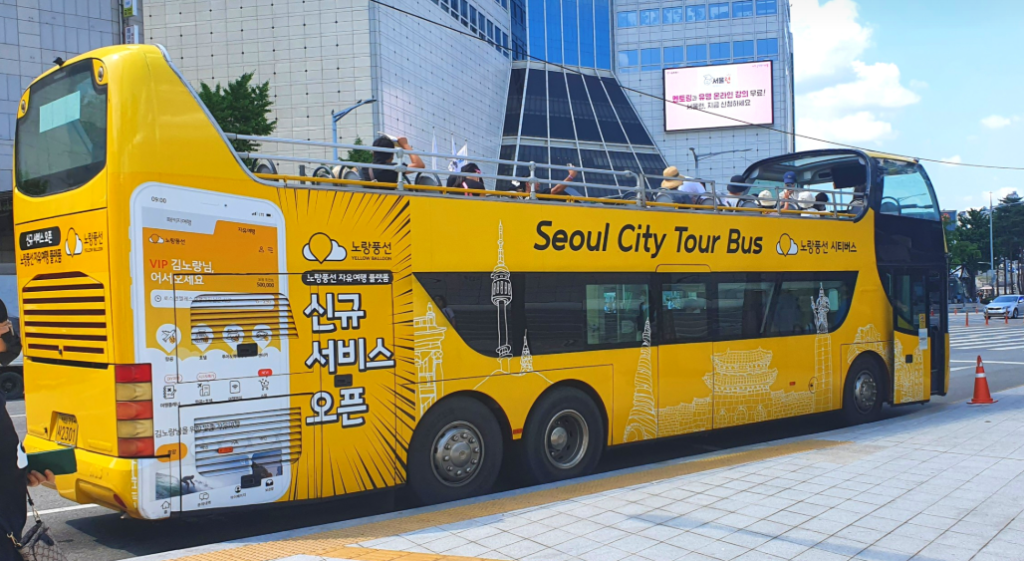
Back in June 2022, I boarded the yellow Norang Pungseon bus at Stop 1 right outside Dongdaemun History & Culture Park (DDP) Station Exit 1 with my five-year-old son.
🎟️ Tickets and Passenger Policies:
At the time of our trip, children under 6 years old rode completely free of charge with a paying adult. One crucial practical detail to note: free toddler tickets do not include a guaranteed seat. On highly crowded days, this might mean sitting on your lap, but because our weekday morning departure wasn’t fully sold out, my son got to enjoy his own window seat for the entire loop.
The booking system required buying tickets online in advance and exchanging the digital voucher for a physical paper ticket or wristband at the DDP ticket booth before boarding. Once exchanged, you can hop on and off freely at any designated stop.
⚠️ 2026 Operational Note: Fares, exact route stops, and booking requirements are subject to seasonal updates. Always verify current guidelines on the official Norang Pungseon website before booking your slots.
☀️ The Reality Check: Beating the Summer Heat:
Here is a realistic warning no official travel brochure will give you: the open upper deck of a double-decker bus during a Seoul summer is intensely hot. The upper seats are directly exposed to the sun, and the metal can heat up quickly.
To keep my five-year-old comfortable, we invented a fun routine. We sat on the open upper deck to snap photos and feel the wind while the bus was moving. The moment the sun felt overwhelming, we retreated down to the fully air-conditioned lower deck to cool off, heading back upstairs once we were refreshed. For a child, this constant switching between decks was like an attraction in itself!
3. Seoul City Tiger Bus: The Red Icon Outside My Window
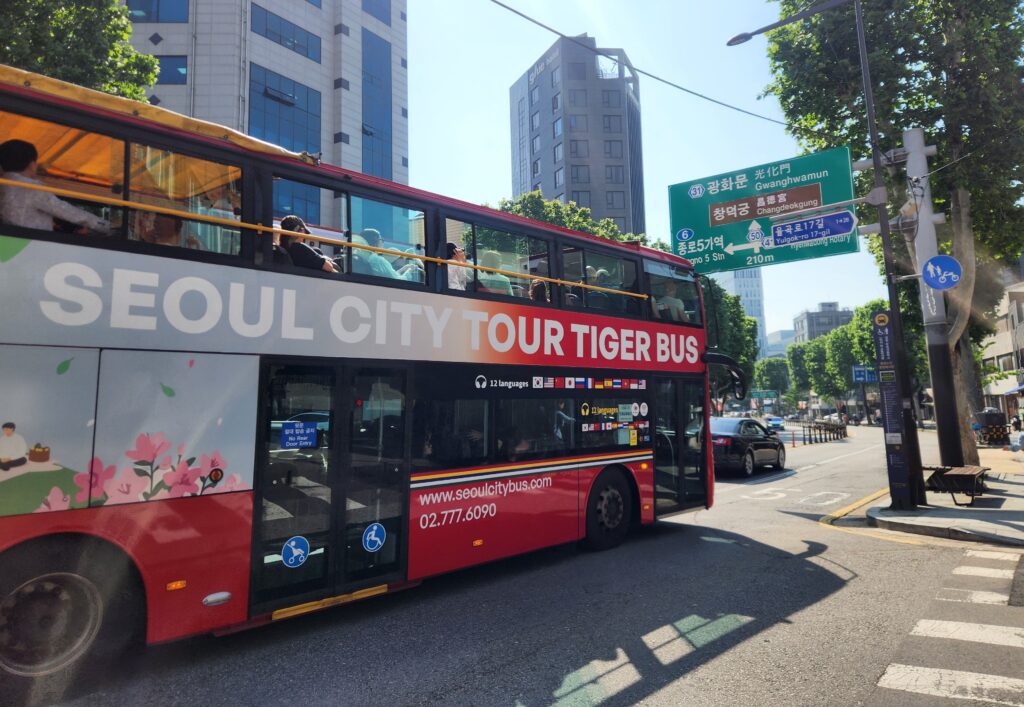
Now that our family is settled in the heart of Jongno, the red Tiger Bus—officially known as the Seoul City Tour Bus—is a familiar part of my daily view. Departing from its main hub near Gwanghwamun Station, this service is highly regarded for its deep coverage of Seoul’s historic core.
🗼 The N Seoul Tower Specialist:
If reaching the summit of N Seoul Tower is a major priority on your checklist, the Tiger Bus (Downtown Palace Namsan Course) is generally the more efficient choice. It drives passengers directly up the scenic Namsan mountain roads right to the base of the tower, saving you from navigating the public bus or cable car transfers independently.
🪑 The Front Row Battle:
Just like the yellow bus, the ultimate seats on the red bus are located in the very front row of the second deck. These seats give you a magnificent, unobstructed 180-degree panoramic view of Seoul’s grand palace gates and towering skyscrapers. Because competition for these spots is fierce, my advice is to arrive at Gwanghwamun at least 20 to 30 minutes before departure to line up early.
4. Pro Tips for Your First City Tour Bus Ride
-
Pack Weather Essentials: If traveling in July or August, sunblock, sunglasses, a wide-brimmed hat, and a bottle of ice water are absolutely mandatory for the upper deck.
-
Master the Hop-Off Strategy: A Seoul City Tour Bus is most rewarding when treated as transportation, not just a roller coaster. Pick 2 or 3 major spots (like Cheong Wa Dae on the yellow route or Namsan Tower on the red route) to disembark, explore for an hour, and catch the next approaching bus.
-
Use Naver Map to Coordinate: While the tour buses have set schedules, traffic in central Seoul can cause slight delays. Keep your Naver Map active to track your position and estimate when the next bus will arrive.
Summary Checklist for Seoul City Tour Buses
-
Choose Norang Pungseon (Yellow) if you want to start from Dongdaemun (DDP) and explore traditional local markets.
-
Choose Tiger Bus (Red) if you prefer starting near Gwanghwamun and want a direct path up to N Seoul Tower.
-
Book online in advance to secure vouchers, especially if visiting during spring cherry blossom or autumn foliage seasons.
-
Utilize the air-conditioned lower deck strategically if traveling with small children during hot summer months.
-
Arrive at the primary terminal stations 20+ minutes early if you want to secure the coveted front-row seats on the upper deck.