
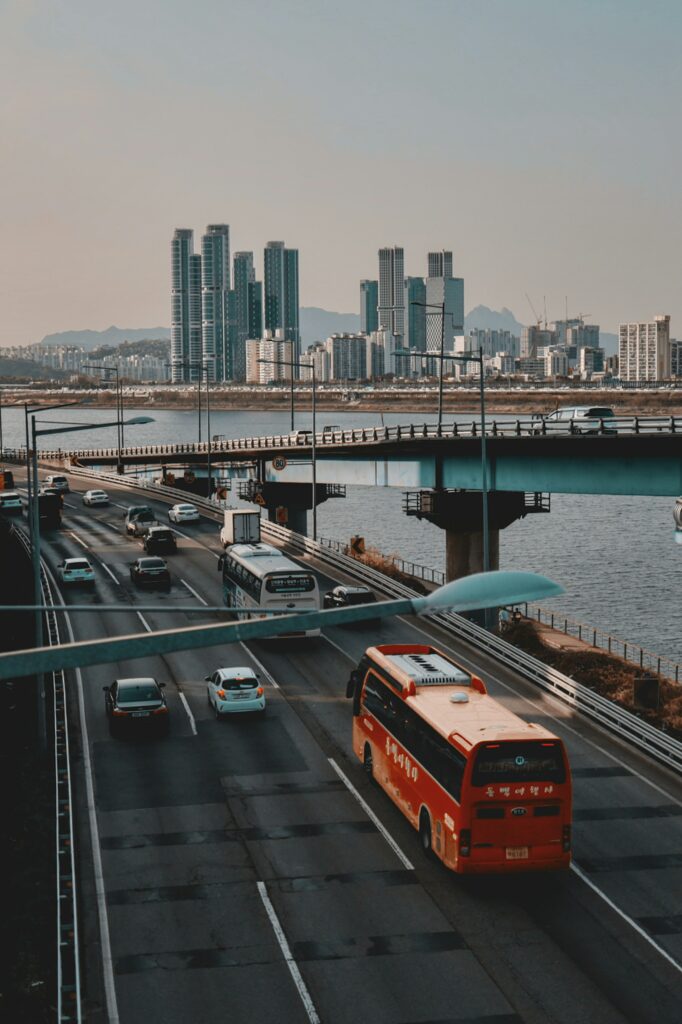
While high-speed trains are fantastic, taking an express bus in Korea is another highly efficient, budget-friendly, and surprisingly luxurious way to travel to the countryside. If you want to explore hidden local towns that don’t have KTX stations, the intercity bus network is your best friend.
In this 2026 updated guide, I will break down exactly how to book a ticket, explain why Korean highway traffic won’t delay your trip, and introduce you to what I consider the absolute highlight of any Korean road trip: the legendary highway rest stops.
1. How to Book an Express Bus Ticket in Korea
Foreigners can easily book long-distance bus tickets online. There are two main official portals depending on your route, both available in English:
🌐 Kobus (고속버스): Primarily for premium express buses running between major metropolitan cities.
🌐 Intercity Bus (시외버스): Primarily for buses connecting smaller towns and rural areas.
You can visit their official websites or download the T-money Go or Express Bus Mobile apps. Simply select your departure terminal (such as Seoul Express Bus Terminal or Central City Terminal), choose your destination, and pay with an international credit card. Once booked, you will receive a QR code ticket on your phone, which you simply scan upon boarding.
2. The Seat Hack: Always Choose “Udeung” (Premium) Buses
When booking, you will see different bus classes: Economy (일반 – Ilban), Premium (우등 – Udeung), and Luxury (프리미엄 – Premium).
I highly recommend choosing the Udeung (우등) Bus. Whenever I ride these, I am always amazed by how luxurious they feel—it is genuinely comparable to flying business class on an airplane. Unlike regular buses with 4 seats per row, Udeung buses only have 3 seats per row (a 1-2 configuration). The seats are incredibly wide, offer massive legroom, and recline deeply, allowing you to lie back and travel in absolute comfort for hours at a fraction of a train ticket’s price.
3. Why Buses Outsmart Traffic: The Dedicated Bus Lanes
Many tourists hesitate to take a bus because they fear getting stuck in Korea’s notorious weekend highway traffic. However, Korea has a brilliant solution: the Exclusive Bus Lane (버스전용차로).
On major highways like the Gyeongbu Expressway, the leftmost lane is strictly painted with blue lines and reserved only for buses and large passenger vans during peak hours. Even when regular cars are trapped in bumper-to-bumper traffic during national holidays or weekends, your express bus will zoom past them at full speed. It is incredibly satisfying and ensures you arrive at your destination on time.
4. The True Highlight of the Trip: Korean Highway Rest Stops (Hyugeso)
In my opinion, highway rest stops (휴게소 – Hyugeso) are the absolute crown jewel of traveling by bus in Korea. For long-distance routes, the bus driver will always pull into a massive rest stop for a strict 15 to 20-minute break.
🚨 The Most Important Survival Rule at a Rest Stop: Restrooms First, Snacks Second.
This is something I learned the hard way. On one family trip, I made the rookie mistake of heading straight to the food stalls with my kids. By the time we finished, the women’s restroom line was enormous—and in Korea, the ladies’ line at highway rest stops is notoriously long. I ended up rushing back to the bus with barely a minute to spare, nearly missing it entirely. Now I follow one strict rule without exception: restrooms the moment you step off the bus, snacks with whatever time remains.
One more practical tip: unlike trains where you can freely visit the onboard restroom at any time, buses only stop at scheduled rest stops. Drink beverages in moderation during the ride to avoid an uncomfortable situation between stops.
And don’t forget to note your bus’s license plate number before wandering off so you don’t accidentally board the wrong vehicle!
Top 3 Must-Eat Rest Stop Snacks:
🦑 Macbanseok Ojingeo (맥반석오징어): Chewy squid roasted directly on hot elvan stones. Beautifully smoky, savory, and the ultimate traditional Korean road trip snack.
🌪️ Hoeori Gamja (회오리감자 – Tornado Potato): This one always surprises first-timers. When my kids first spotted it at the stall, they had no idea it was even made from a potato—it’s spiral-cut so thin and long that it looks like a completely different food entirely. Once they tasted it dusted with sweet onion or cheese powder, they were completely hooked. It has been a non-negotiable rest stop order for our family ever since.
🌰 Hodu-gwaja (호두과자 – Walnut Cakes): Warm, bite-sized pastries shaped like walnuts, stuffed with sweet red bean paste and real walnut chunks. They are baked fresh on-site, and eating a bag of these while they are steaming hot is pure heaven.
Summary Checklist for International Bus Travelers
- Book via Kobus or Intercity Bus portals and keep your QR code ticket ready.
- Upgrade to a Udeung (우등) seat for a business-class experience at a budget price.
- Don’t worry about weekend traffic; the blue bus lanes will bypass the jams.
- At rest stops: restrooms first, snacks second—the women’s line moves slowly!
- Drink beverages sparingly; unlike trains, there’s no onboard restroom between stops.
- Note your bus’s license plate number before exploring the rest stop.