
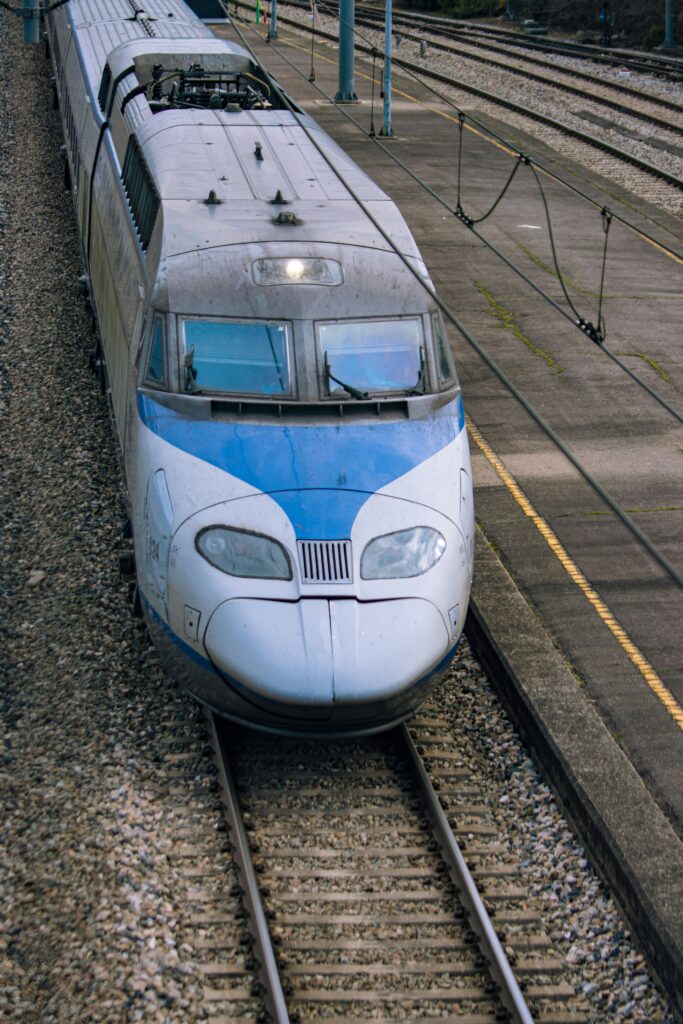
For international tourists planning to explore beyond Seoul, boarding a train in Korea is the ultimate way to reach your destination quickly and comfortably. Traveling south from the capital city offers a quick geographical blueprint of the peninsula: the left side opens up into Jeolla-do, while the right side leads into Gyeongsang-do.
If you are looking for historical and cultural roots, Jeonju (in Jeolla-do) and Gyeongju (in Gyeongsang-do) are the two main pillars of Korean heritage. Additionally, a massive wave of global travelers now flocks to Busan, a vibrant coastal city located at the southeastern tip of Gyeongsang-do. The absolute best way to reach these long-distance destinations is by utilizing the high-speed rail network. In fact, locals heavily rely on these bullet trains during national holidays, and many families take the KTX on weekends to travel down south and pick up a rental car locally.
In this updated 2026 guide, I will share essential tips from my own family trips with my kids, along with hidden rules of Korean train travel that you won’t find in standard travel brochures.
If you are looking for historical and cultural roots, Jeonju (in Jeolla-do) and Gyeongju (in Gyeongsang-do) are the two main pillars of Korean heritage. Additionally, a massive wave of global travelers now flocks to Busan, a vibrant coastal city located at the southeastern tip of Gyeongsang-do. The absolute best way to reach these long-distance destinations quickly and comfortably is by taking a train in Korea. In fact, locals heavily rely on high-speed trains during national holidays, and many families take the KTX on weekends to travel down south and pick up a rental car locally.
In this updated 2026 guide, I will share essential tips from my own family trips with my kids, along with hidden rules of Korean train travel that you won’t find in standard travel brochures.
1. KTX vs. Regular Trains: Understanding the Differences
Korea operates two main categories of trains: high-speed rail (bullet trains) and regular slow trains (conventional rail). Unlike subways, trains operate on a strict, legally binding schedule. They depart precisely on time, so you must arrive at the platform beforehand.
| Train Type | Speed / Travel Time (Seoul to Busan) | Average Price | Characteristics |
| KTX / SRT | High-Speed (Approx. 2.5 hours) | High (Approx. 60,000 KRW) | Express bullet trains. Clean, modern, with laptop charging ports. |
| ITX-Saemaeul | Semi-Express (Approx. 4.5 hours) | Medium (Approx. 40,000 KRW) | Comfortable seats, fewer stops than Mugunghwa, but slower than KTX. |
| Mugunghwa | Slow / Local (Approx. 5.5 hours) | Low (Approx. 28,000 KRW) | The slowest train. Stops at almost every local station. Great for budget scenic travel. |
2. Golden Rules for Seating: Direction, Power, and 4-Person Hacks
When booking your tickets via the official LetsKorail website or the Korail Talk app, you will be asked to select your seats. Keep these three local realities in mind:
-
🧭 Forward vs. Backward Facing Seats: KTX trains have seats that face forward (순방향 – Sun-bang-hyang) and backward (역방향 – Yeok-bang-hyang). If you are prone to motion sickness, make sure you double-check the arrow indicators on the booking screen and strictly avoid backward-facing seats.
-
🔌 Power Outlets & Wi-Fi Reality: Every seat row comes equipped with electrical outlets and USB ports to charge your phones or laptops. Free public Wi-Fi is available onboard. However, a fair warning by Korean high-speed standards: the train Wi-Fi can be quite slow and unstable. It is perfectly fine for text messaging or checking emails, but streaming high-definition videos might trigger constant buffering.
-
👨👩👧👦 The 4-Person Rotation Hack (A Family Favorite): As a family of four, one of our absolute favorite KTX traditions is reserving the face-to-face companion seats in the middle cabin section. Sitting across from each other instantly transforms the ride into a mini picnic on wheels—my kids always say it feels more like a field trip than just getting from A to B. And here’s something I didn’t expect: my kids actually prefer the backward-facing seats. What felt slightly odd to me was pure adventure to them. If you are traveling with a group or young children, many regular train seats can also be manually rotated to face each other. Just note that these 4-person configurations sell out incredibly fast, so book well in advance.
3. The Golden Rule of Departure Stations: Seoul vs. Yongsan
This is the most common mistake foreigners make. In Seoul, your departure station depends entirely on your final destination. If you go to the wrong station, you will miss your train.
-
🗺️ Seoul Station (서울역): Primarily serves the Gyeongbu Line. Choose this if you are traveling to Busan, Daegu, Daejeon, or Gyeongju.
-
🗺️ Yongsan Station (용산역): Primarily serves the Honam and Jeolla Lines. Choose this if you are traveling to Gwangju, Mokpo, Jeonju, or Yeosu.
💡 Emergency Fix: If you accidentally arrive at Seoul Station but your ticket says Yongsan Station, do not panic. Take Seoul Subway Line 1 (Dark Blue). It is a direct 2-stop ride that takes less than 5 minutes.
4. How to Board: No Ticket Barriers & Say Goodbye on the Platform!
One unique feature of Korean train stations is the complete absence of ticket turnstiles or gates. You do not scan your ticket to enter the platform area.
-
Arrive at the station 15–20 minutes before departure.
-
Check the electronic departure board for your train number and the assigned Platform (타는 곳 – Taneun got).
-
Walk directly down to the platform.
-
🫂 The Local Culture: Because there are no ticket barriers, anyone can walk down to the platform freely without a ticket. It is incredibly common in Korea for friends or family members to walk all the way down to the train doors to see off their loved ones and share a final goodbye right before the train departs.
5. Korean Train Food Culture: Best Snacks to Buy
Unlike subways, eating and drinking are officially permitted inside Korean trains. When I travel down to the countryside with my kids, buying snacks at the station before boarding is a non-negotiable family ritual. Both Seoul Station and Yongsan Station are packed with specialized bakeries, kimbap shops, and convenience stores.
-
🍱 What We Actually Eat: Our usual haul includes fresh pastries from the station bakeries, kimbap rolls, and simple snacks. Once onboard, you will often see locals enjoying roasted or hard-boiled eggs (Guun-gyeran), a classic Korean train snack that you can grab at the platform convenience store.
-
🚫 The Unwritten Rule: While eating is allowed, strictly avoid foods with strong odors out of respect for fellow passengers. Do not bring heavily seasoned fried chicken, hot cup ramyun, or foods with strong garlic or kimchi smells into the cabin. Stick to odorless options like pastries, sandwiches, or covered coffee, and keep your conversations quiet while eating.
6. Don’t Panic If Nobody Checks Your Ticket
First-time travelers in Korea are often shocked to find that nobody checks their ticket before boarding or during the trip. KTX conductors do not do a row-by-row manual check. Instead, they walk through the cabins periodically checking a digital seating chart on their handheld devices.
If a conductor passes by your row without asking for your ticket, it simply means you are sitting in the exact seat you paid for. If someone hasn’t checked your ticket for the entire journey, that is completely normal—don’t feel anxious! Just keep your digital ticket readily accessible on your phone just in case.
Summary Checklist for Traveling by Train in Korea
-
Identify your destination: Seoul Station for Busan/Gyeongju, Yongsan Station for Jeonju/Yeosu.
-
Check your seat direction during booking if you get motion sickness.
-
Arrive early to buy non-pungent snacks at the station before boarding.
-
Don’t look for a ticket gate; walk straight down to your designated platform.
-
Keep your digital ticket handy on your phone, as conductors check seats digitally during the ride.
👉 Click Here to Book Your Official KTX Train Tickets Now (LetsKorail)